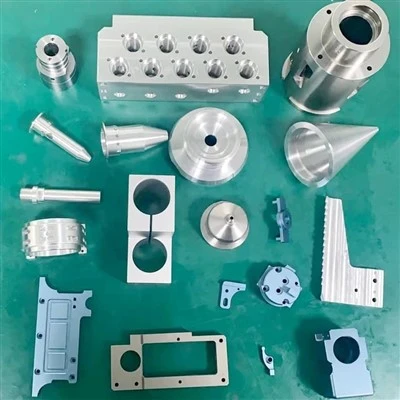
In modern manufacturing, the precision and reliability of precision parts directly impact the performance and safety of end products. With the continuous increasing demands for part quality from high-end equipment, aerospace, and electronics industries, establishing a scientific and rigorous inspection process has become a core support for the manufacturing chain.
Precision parts inspection begins with clear specifications. Based on design drawings, process documents, and industry standards (such as ISO and GB series), key parameters such as dimensional tolerances, form and position errors, and surface roughness must be defined to form quantifiable inspection benchmarks. At this stage, it is crucial to ensure that technical requirements match inspection capabilities to avoid subsequent deviations due to ambiguous standards.
The inspection preparation stage emphasizes the suitability of the environment and tools. Precision parts are sensitive to the environment and must be inspected in a constant temperature (typically 20±2℃), constant humidity (40%-60%RH), and vibration-free laboratory to eliminate the interference of temperature and humidity fluctuations or mechanical disturbances on the measurement results. Simultaneously, the accuracy of equipment such as coordinate measuring machines, image analyzers, and profilometers must be calibrated, and probes, gauges, and fixtures matched to the features being measured must be selected to ensure the effectiveness of contact or non-contact measurements.
When conducting inspections, a logical progression "from overall to specific, from static to dynamic" must be followed. The initial inspection involves macroscopic observation to confirm the absence of obvious deformation, burrs, or damage to the parts. Subsequently, a coordinate measuring machine (CMM) is used to collect batch data on critical dimensions, and software analysis is employed to assess dimensional chain compliance. For geometric tolerances (such as perpendicularity and coaxiality), specialized fixtures or laser trackers are used for multi-point verification. Surface quality inspection utilizes optical microscopes or white light interferometers to identify microscopic defects such as microcracks and scratches. Strict adherence to sampling rules is essential throughout the process; critical characteristics must be fully inspected, and raw data must be recorded.
In the data processing and judgment phase, outliers must be removed using specialized software, and indicators such as the process capability index (CPK) must be calculated to assess stability. Inspection results must be double-checked; any deviations must be traced back to the relevant process stage, and corrective actions must be initiated. Finally, a report containing inspection conclusions, deviation analysis, and improvement suggestions is generated, providing empirical support for quality improvement.
The precision parts inspection process, centered on "precise definition, environmental control, system measurement, and data-driven approach," serves as both a technical barrier for quality control and a cornerstone for the manufacturing industry's leap towards high-end manufacturing. Only by strictly adhering to standards at every stage can reliable genes be infused into industrial equipment.