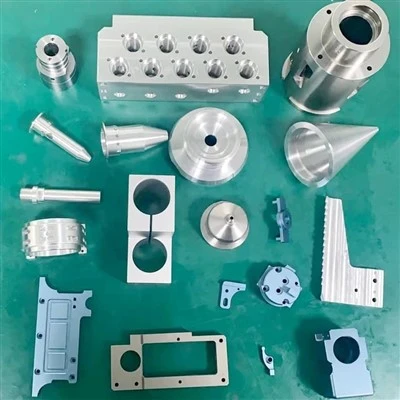
Precision components, due to their high precision, high reliability, and complex functions, are often deployed in environments with extremely stringent performance and stability requirements.These environments encompass extreme temperatures, high speeds and high loads, highly corrosive media, high cleanliness levels, and space-constrained conditions. Their suitability depends not only on the design and manufacturing quality of the components themselves but also on effective environmental matching through material selection, structural reinforcement, and surface protection.
In extreme temperature environments, precision components must maintain dimensional and mechanical property stability. For example, high-temperature components in aerospace engines need to operate briefly above 1000 degrees Celsius or serve for extended periods at hundreds of degrees Celsius. In such cases, high-temperature alloys must be selected, supplemented by directional solidification or single-crystal processes, while optimizing geometry to reduce thermal stress concentration. In cryogenic environments such as liquefied natural gas equipment or aerospace cryogenic tests, materials must avoid cryogenic embrittlement, ensuring normal function through fine-grained strengthening and cryogenic toughness design. Temperature cycling conditions require components to have good thermal expansion matching and fatigue resistance to prevent microcracks caused by repeated expansion and contraction.
High-speed, high-load environments are another typical application scenario for precision parts. Shafts and bearing housings in machine tool spindles, turbomachinery rotors, and high-speed centrifugal equipment, in addition to meeting micron-level rotational accuracy, must also suppress centrifugal forces and vibrations caused by high-speed rotation. This requires controlling mass distribution and implementing precise dynamic balancing in the design; materials should possess high specific strength and fatigue resistance; and surface treatments should enhance wear resistance and creep resistance to maintain long-term operational stability.
Highly corrosive and chemically erosive environments place stringent requirements on the materials and protection of precision parts. In marine equipment, chemical equipment, and oil and gas extraction machinery, parts are often exposed to salt spray, acids, alkalis, or hydrogen sulfide-containing media. Stainless steel, nickel-based alloys, or titanium alloys must be selected, combined with electrochemical protection, dense coatings, or surface passivation processes to block corrosion paths and maintain dimensional accuracy. For optical or electronic precision parts, it is also necessary to prevent corrosion products from contaminating functional surfaces.
High-cleanliness environments are found in semiconductor manufacturing, biomedicine, and precision optical instruments. These environments demand that components not only meet precision standards but also prevent particle shedding and electrostatic adsorption during machining and assembly. Electropolishing, ultrasonic cleaning, and vacuum encapsulation are commonly employed, and materials selected to avoid volatile or precipitating particles are avoided.
Space-constrained and multi-field coupling environments are frequently found in microelectromechanical systems (MEMS), implantable medical devices, and satellite attitude control mechanisms. Components must achieve their intended functions within an extremely small volume, balancing thermal management, electromagnetic compatibility, and mechanical load-bearing capacity. Design trends towards integration, lightweighting, and multifunctional composites, while high-precision micro-machining ensures that performance does not degrade with size reduction.
In summary, the applicable environments for precision components are diverse and extreme, and their successful application depends on the synergistic optimization of design, materials, processes, and protection. In the ever-expanding spectrum of environments, precision components uphold performance to support the reliable operation of high-end equipment under harsh conditions and provide a crucial foundation for emerging technological fields.