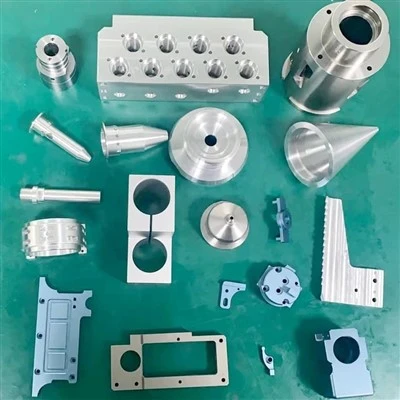
As a core component for power transmission, the manufacturing and application methods of driveshafts directly determine the product's performance, reliability, and service life.From material selection to machining and forming, from dynamic balancing control to operating condition matching, each step must follow a systematic and meticulous technical approach to meet the stringent requirements of different fields for torque transmission, dynamic stability, and environmental adaptability.
In terms of manufacturing methods, the first step is material selection and pretreatment. Driveshafts commonly use high-strength alloy steel, quenched and tempered steel, or lightweight aluminum alloys. The grade and heat treatment process are determined based on the influence of load, speed, and working environment. Quenching and tempering alloy steel can improve its comprehensive mechanical properties, ensuring fatigue strength under high torque and impact loads; aluminum alloys, while maintaining a certain strength, achieve lightweight design, making them suitable for weight-sensitive applications in vehicles and aerospace. After materials arrive at the factory, they must undergo compositional inspection and ultrasonic testing to eliminate internal defects.
Forming and machining mainly involve CNC turning, milling, and grinding to ensure that the dimensional accuracy and geometric tolerances of key parts such as shaft diameter, splines, and flanges meet design requirements. Precision machining of journals and splines is particularly important, as it affects the quality of fit with bearings and couplings. Multi-axis simultaneous machining can complete complex contours and end face treatments in one operation, reducing the number of clamping operations and cumulative errors. For telescopic drive shafts, the machining of spline pairs must ensure tooth symmetry and consistent pitch to achieve smooth extension and torque transmission.
Dynamic balancing is a critical step in the manufacturing process. When the drive shaft rotates at high speed, mass eccentricity can cause vibration and noise, affecting system stability. A double-sided dynamic balancing method is typically used, measuring the imbalance and phase on specialized equipment, and correcting it by removing or adding weights to keep the residual imbalance within industry standards. This step is especially important for high-speed vehicles, fans, and precision machinery.
Surface strengthening treatments are also common methods to improve practicality, including high-frequency quenching, carburizing, nitriding, or spraying anti-corrosion coatings to enhance the shaft's wear and corrosion resistance and extend its service life. For drive shafts operating in marine, chemical, or high-humidity environments, the anti-corrosion coating and sealing structure must be optimized simultaneously.
In application, the selection and arrangement of drive shafts must be based on the specific working conditions. First, determine the range of transmitted torque, operating speed, and shaft angle, and select the appropriate type of constant-speed, non-constant-speed, or telescopic drive shaft. Second, ensure proper installation and alignment, guaranteeing that the coaxiality and axial clearance of the flanges or couplings at both ends are within the design range to avoid additional loads and abnormal wear. Third, configure lubrication and protection devices according to actual working conditions, regularly check the dynamic balance and the tightness of connecting parts, and promptly eliminate potential faults.
In summary, the manufacturing and application methods for drive shafts encompass material selection, precision machining, dynamic balancing control, surface strengthening, and scientific selection, forming a closed-loop guarantee system from production to use, providing a solid foundation for their efficient and reliable operation.